
Journal of the American Chemical Society
DOI: 10.1021/jacs.8b10355


from A via a.sfakia on Inoreader http://bit.ly/2SPtaFr


Ammonia (NH3) is a highly irritant, alkaline gas. Atmospheric emission of NH3 was recognized as an environmental challenge. As a global issue, the NH3 emission survey with spatially detailed information demonstrated that the sources of atmospheric NH3 include agriculture (livestock wastes, fertilizers) and some industrial activities. As an environmental pollution, excessive NH3 exposure can induce many bird dysfunction. Neutrophils respond to multiple invading pathogens through different mechanisms. In order to investigate the effect of NH3 exposure on broilers' neutrophil, 1-day-old broilers were treated with/without NH3 for 28 days. We extracted neutrophils from peripheral blood of chicken with/without NH3 exposure and subsequently stimulated with PMA. Changes of cytokines and inflammatory bodies, heat shock proteins (HSPs), and glucose metabolism of neutrophil were examined in both cases. We not only explored that the index associated with inflammation changed due to NH3 exposure but also observed the status of neutrophils which was treated with PMA stimulation. After NH3 exposure, IL-1β and IL-6 were significantly increased on broilers neutrophil. Inflammatory-related factors (NLRP3, ASC, and caspase-1) were significantly elevated. The mRNA expression of HSP70 and HSP90 was increased significantly. All glucose metabolism indicators were reduced. In summary, we concluded that NH3 enhanced inflammation and disrupted glucose metabolism, and increased the expression of HSPs and inflammatory factors. In addition, the sensitivity of neutrophils to exogenous stimuli was diminished. This information can not only be used to evaluate the damage of NH3-spiked neutrophils to chickens, but also provide clues for human health pathophysiology caused by excess NH3, providing valuable information for NH3 risk management.
US science agencies set for budget boost in deal to avert government shutdown
US science agencies set for budget boost in deal to avert government shutdown, Published online: 14 February 2019; doi:10.1038/d41586-019-00590-3
NASA, the National Science Foundation and the Environmental Protection Agency are among the agencies whose funding would increase.
Author Correction: Predictable and precise template-free CRISPR editing of pathogenic variants
Author Correction: Predictable and precise template-free CRISPR editing of pathogenic variants, Published online: 14 February 2019; doi:10.1038/s41586-019-0938-4
Author Correction: Predictable and precise template-free CRISPR editing of pathogenic variants
Daily briefing: Nature editors review Ladybird books
Daily briefing: <i>Nature </i>editors review Ladybird books, Published online: 14 February 2019; doi:10.1038/d41586-019-00592-1
Britain's top boffins write pocket-sized guides, final farewell to Opportunity and one scientist's quest to learn why he didn't get tenure.
ABCB1, also known as P-glycoprotein, actively extrudes xenobiotic compounds across the plasma membrane of diverse cells, which contributes to cellular drug resistance and interferes with therapeutic drug delivery. We determined the 3.5-angstrom cryo–electron microscopy structure of substrate-bound human ABCB1 reconstituted in lipidic nanodiscs, revealing a single molecule of the chemotherapeutic compound paclitaxel (Taxol) bound in a central, occluded pocket. A second structure of inhibited, human-mouse chimeric ABCB1 revealed two molecules of zosuquidar occupying the same drug-binding pocket. Minor structural differences between substrate- and inhibitor-bound ABCB1 sites are amplified toward the nucleotide-binding domains (NBDs), revealing how the plasticity of the drug-binding site controls the dynamics of the adenosine triphosphate–hydrolyzing NBDs. Ordered cholesterol and phospholipid molecules suggest how the membrane modulates the conformational changes associated with drug binding and transport.
Overcoming the trade-offs among power consumption, fabrication cost, and signal amplification has been a long-standing issue for wearable electronics. We report a high-gain, fully inkjet-printed Schottky barrier organic thin-film transistor amplifier circuit. The transistor signal amplification efficiency is 38.2 siemens per ampere, which is near the theoretical thermionic limit, with an ultralow power consumption of <1 nanowatt. The use of a Schottky barrier for the source gave the transistor geometry-independent electrical characteristics and accommodated the large dimensional variation in inkjet-printed features. These transistors exhibited good reliability with negligible threshold-voltage shift. We demonstrated this capability with an ultralow-power high-gain amplifier for the detection of electrophysiological signals and showed a signal-to-noise ratio of >60 decibels and noise voltage of <0.3 microvolt per hertz1/2 at 100 hertz.
Topography, or depth variation, of certain interfaces in the solid Earth can provide important insights into the dynamics of our planet interior. Although the intermediate- and long-range topographic variation of the 660-kilometer boundary between Earth's upper and lower mantle is well studied, small-scale measurements are far more challenging. We found a surprising amount of topography at short length scale along the 660-kilometer boundary in certain regions using scattered P'P' seismic waves. Our observations required chemical layering in regions with high short-scale roughness. By contrast, we did not see such small-scale topography along the 410-kilometer boundary in the upper mantle. Our findings support the concept of partially blocked or imperfect circulation between the upper and lower mantle.
Cleavage of amyloid precursor protein (APP) by the intramembrane protease -secretase is linked to Alzheimer's disease (AD). We report an atomic structure of human -secretase in complex with a transmembrane (TM) APP fragment at 2.6-angstrom resolution. The TM helix of APP closely interacts with five surrounding TMs of PS1 (the catalytic subunit of -secretase). A hybrid β sheet, which is formed by a β strand from APP and two β strands from PS1, guides -secretase to the scissile peptide bond of APP between its TM and β strand. Residues at the interface between PS1 and APP are heavily targeted by recurring mutations from AD patients. This structure, together with that of -secretase bound to Notch, reveal contrasting features of substrate binding, which may be applied toward the design of substrate-specific inhibitors.


The aim of the study was to assess morphological predictors for lymph node metastases (Stage III disease) in colon cancer on computed tomography.
Ninety-four patients with histology-proven colon cancer (adenocarcinoma) who underwent elective primary curative resection between the years 2012 and 2014 were included. Contrast-enhanced CT examinations were independently reviewed by two blinded observers regarding tumor location, depth of tumor invasion, and presence of lymph node metastases. Ocular presence of internal heterogeneity and presence of irregular outer border were used as morphological criteria for lymph node involvement. Protocol-based histopathology after curative surgery served as reference standard. Sensitivity, specificity, positive (PPV) and negative (NPV) predictive values, and accuracy for each morphological criterion for prediction of stage III disease were calculated. Inter-observer agreement was compared using Kappa statistics.
According to histopathology, 59 patients were staged as I–II disease and 35 patients were staged as stage III disease. The presence of internal heterogeneity in a lymph node on CT resulted in moderate sensitivity (66–77%) but high specificity (95–95%) for prediction of Stage III disease by both observers. The presence of irregular outer border also resulted in poor sensitivity (49–54%) but high specificity (97–97%). The combination of either internal heterogeneity and/or irregular outer border per patient resulted in a moderate sensitivity (67–77%) and high specificity (95–95%), PPV (89–96%), and NPV (84–88%). Inter-observer agreement (Cohens Kappa) was 0.72. Consensus reading for the combined criteria resulted in sensitivity and specificity of 69% and 100%, respectively.
Using morphological criteria for lymph node metastases on CT examination in patients with colon cancer results in high specificity but moderate sensitivity in predicting stage III disease.
We investigated the difference in ciliary beat responsiveness to acetylcholine in ex vivo and the difference in the expressions of associated molecules (M1/M3 muscarinic receptors, pannexin‐1 and P2X7 purinergic receptor) between the nasal polyp and turbinate mucosa.
Laboratorial study.
Nasal polyp and inferior turbinate were collected from patients with hypertrophic rhinitis and/or nasal polyp during endoscopic sinonasal surgery.
The mucosa was cut into thin strips, and ciliary movement was observed under a phase‐contrast light microscope equipped with a high‐speed digital video camera. The samples were also examined by scanning electron microscopy, fluorescence immunohistochemistry, and quantitative reverse transcription‐polymerase chain reaction.
Cilia were well preserved in both tissues at the ultrastructural level. The baseline ciliary beat frequency (CBF) was not different between the two tissues. The CBF of the turbinate was significantly increased by stimulation with acetylcholine (P<0.001), but that of the polyp was not. The ratio of the acetylcholine‐stimulated CBF to the baseline CBF was significantly lower in the polyp than in the turbinate (P<0.001). Immunohistochemical study revealed that immunoreactivities for M3, pannexin‐1 and P2X7 were weaker in the polyp than in the turbinate. The mRNA expressions of M1, M3 and P2X7 were significantly lower and that of pannexin‐1 tended to be lower in the polyp than in the turbinate.
These results indicate that ciliary beat responsiveness to acetylcholine is decreased in the nasal polyp. This may be explained by the decreased expressions of M3, P2X7 and probably pannexin‐1 in this tissue.
Nasal polyp, ciliary beat frequency, acetylcholine, muscarinic receptor, pannexin‐1 channel, P2X7 purinergic receptor
This article is protected by copyright. All rights reserved.
Sensitization to common environmental aeroallergens plays a significant role in the pathogenesis and severity of respiratory allergic disorders, specifically asthma and allergic rhinitis. Understanding sensiti...
from A via a.sfakia on Inoreader http://bit.ly/2BzoCcu
Intravenous crystalloid solutions are administered commonly for critically ill patients. We performed this meta-analysis of randomized trials with trial sequential analysis (TSA) to evaluate effects of chlorid...
from A via a.sfakia on Inoreader http://bit.ly/2IdUZ6f
X-ray nanotomography of coccolithophores reveals that coccolith mass and segment number correlate with grid size
X-ray nanotomography of coccolithophores reveals that coccolith mass and segment number correlate with grid size, Published online: 14 February 2019; doi:10.1038/s41467-019-08635-x
Coccolithophores are one of the most abundant phytoplankton and calcifying organisms, well-known to produce intricate calcareous exoskeletons made of coccoliths. Here the authors show, by using X-ray nanotomography, the dependence of the grid size on the calcite nucleation site number and on the mass of coccoliths.
PLCβ2 negatively regulates the inflammatory response to virus infection by inhibiting phosphoinositide-mediated activation of TAK1
PLCβ2 negatively regulates the inflammatory response to virus infection by inhibiting phosphoinositide-mediated activation of TAK1, Published online: 14 February 2019; doi:10.1038/s41467-019-08524-3
Phospholipase C β (PLCβ) exhibits immuno-modulatory functions but its role in antiviral innate responses is unclear. Here, the authors provide evidence that PLCβ2 down regulates enterovirus-induced pro-inflammatory responses via inhibition of TAK1 activation, and suggest PLC as a potential therapeutic target.
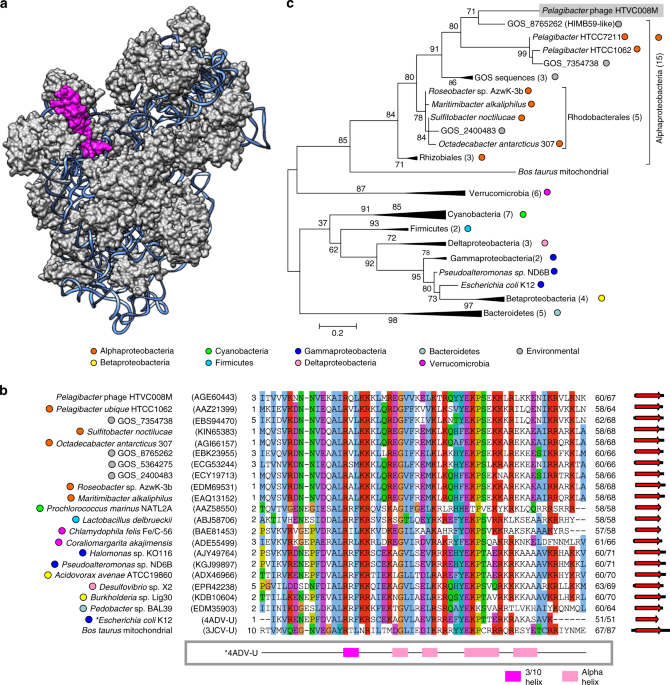
Numerous cultivated and uncultivated viruses encode ribosomal proteins
Numerous cultivated and uncultivated viruses encode ribosomal proteins, Published online: 14 February 2019; doi:10.1038/s41467-019-08672-6
Viruses can encode genes that regulate the host's translational machinery to their advantage. Here, the authors show that viruses encode ribosomal proteins that can be incorporated into the host's ribosome and may affect translation.
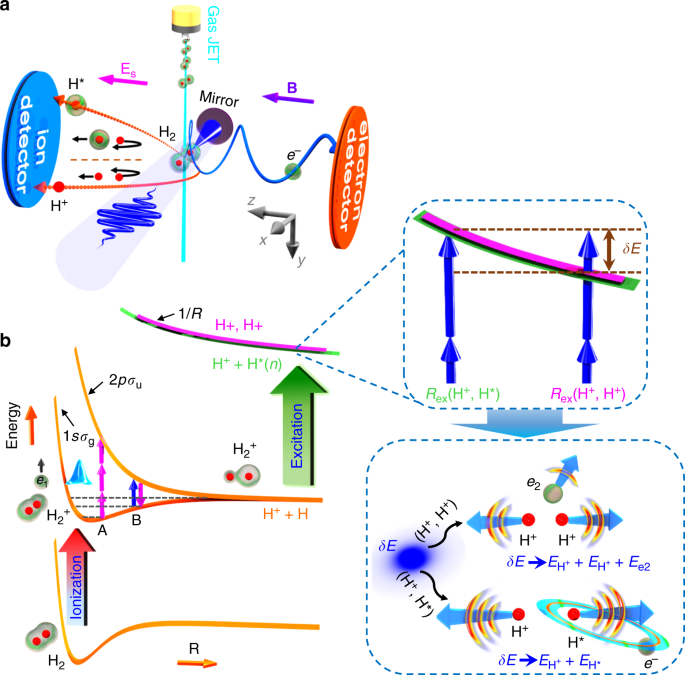
Electron-nuclear correlated multiphoton-route to Rydberg fragments of molecules
Electron-nuclear correlated multiphoton-route to Rydberg fragments of molecules, Published online: 14 February 2019; doi:10.1038/s41467-019-08700-5
Rydberg atoms can be created from photoexcitation of molecules using intense ultrafast laser pulses. Here the authors use a coincidence detection of electrons, ion and excited Rydberg atoms and their energy sharing to reveal the general mechanism of Rydberg state excitation in a dissociating H2 molecule.
Enhanced photoelectrical response of thermodynamically epitaxial organic crystals at the two-dimensional limit
Enhanced photoelectrical response of thermodynamically epitaxial organic crystals at the two-dimensional limit, Published online: 14 February 2019; doi:10.1038/s41467-019-08573-8
To realize efficient optoelectronic devices based on two-dimensional (2D) organic crystals, optimizing the photoelectrical response and growth of these materials at the 2D limit is vital. Here, the authors report enhanced internal photoresponse in large-area 2D crystals using a novel growth method.
Dyke intrusion between neighbouring arc volcanoes responsible for 2017 pre-eruptive seismic swarm at Agung
Dyke intrusion between neighbouring arc volcanoes responsible for 2017 pre-eruptive seismic swarm at Agung, Published online: 14 February 2019; doi:10.1038/s41467-019-08564-9
Using seismic data and numerical modelling, here, the authors characterize the three-month period of unrest occurring prior to the 2017 Agung eruption (Bali, Indonesia). They observe a large uplift signal located at ~5 km from Agung summit corresponding to the emplacement of a 10 km deep magma intrusion between Agung edifice and Batur caldera, suggesting a potential magmatic connection between the two volcanic systems.
Perceptions of bioenergy with carbon capture and storage in different policy scenarios
Perceptions of bioenergy with carbon capture and storage in different policy scenarios, Published online: 14 February 2019; doi:10.1038/s41467-019-08592-5
It is not clear how the public views the acceptability of bioenergy with carbon capture and storage (BECCS). Here the authors explored public perceptions of BECCS by situating the technology in three policy scenarios and found that the policy instrument used to incentivise BECCS significantly affects the degree of public support for the technology.
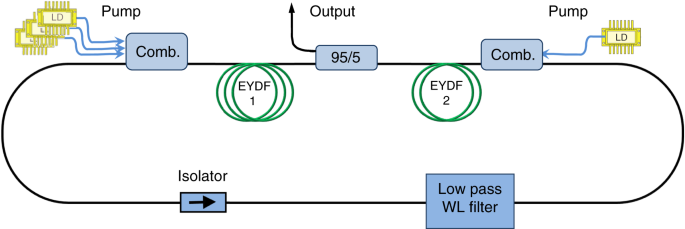
Bose–Einstein condensation of photons in an erbium–ytterbium co-doped fiber cavity
Bose–Einstein condensation of photons in an erbium–ytterbium co-doped fiber cavity, Published online: 14 February 2019; doi:10.1038/s41467-019-08527-0
Bose–Einstein condensates were demonstrated at low temperatures, mostly with ultracold bosonic atoms. Here, the authors demonstrate BEC of photons in a standard 1D erbium–ytterbium co-doped fiber cavity at, below and above room temperature.
Publication date: Available online 14 February 2019
Source: Cortex
Author(s): Cortney M. Howard, Louisa L. Smith, H. Branch Coslett, Laurel J. Buxbaum
The mechanisms and brain regions underlying error monitoring in complex action are poorly understood, yet errors and impaired error correction in these tasks are hallmarks of apraxia, a common disorder associated with left hemisphere stroke. Accounts of monitoring of language posit an internal route by which production planning or competition between candidate representations provide predictive signals that monitoring is required to prevent error, and an external route in which output is monitored using the comprehension system. Abnormal reliance on the external route has been associated with damage to brain regions critical for sensory-motor transformation and a pattern of gradual error 'clean-up' called conduite d'approche (CD). Action pantomime data from 67 participants with left hemisphere stroke were consistent with versions of internal route theories positing that competition signals monitoring requirements. Support Vector Regression Lesion Symptom Mapping (SVR-LSM) showed that lesions in the inferior parietal, posterior temporal, and arcuate fasciculus/superior longitudinal fasciculus predicted action conduite d'approche, overlapping the regions previously observed in the language domain. A second experiment with 12 patients who produced substantial action CD assessed whether factors impacting the internal route (action production ability, competition) versus external route (vision of produced actions, action comprehension) influenced correction attempts. In these 'high CD' patients, vision of produced actions and integrity of gesture comprehension interacted to determine successful error correction, supporting external route theories. Viewed together, these and other data suggest that skilled actions are monitored both by an internal route in which conflict aids in detection and correction of errors during production planning, and an external route that detects mismatches between produced actions and stored knowledge of action appearance. The parallels between language and action monitoring mechanisms and neuroanatomical networks pave the way for further exploration of common and distinct processes across these domains.

Publication date: Available online 13 February 2019
Source: Cortex
Author(s): Costanza Papagno, Tim Shallice
Minimally invasive facial rejuvenation procedures reached an all-time high in the 2016. This reveals a growing interest in a smoother, younger, and tighter look accessible using the esthetic medicine tools like botulinum toxin and dermal filler injections, laser, and microdermabrasion. Forty-five patients from 35 to 52 years old (medium age 43.8), 38 women and 7 men underwent 5 sessions of Fraxel laser, 1 session of very low G prime HA, and Microbotox injection treatments from January 2016 and January 2017, were included in this study. In this study, we demonstrated that the usage of three treatments together, like mBTX, Volite, and Fractional laser, have a better result despite every single technique alone. The clinical result showed 98% (44 patients, 6 males, 38 females) of the patients had a smoother skin surface, brighter, more hydrated, and elastic skin; 68% of our patients (31 patients, 5 males, 26 females) showed less skin defects and staining as well as less small wrinkles, thanks to Fraxel laser treatment; 98% (44 patients, 6 males, 38 females) showed tighter skin with less sebaceous gland secretion. The aim of this study was to demonstrate that the combination of three techniques acts better and faster than single treatment to contrast facial aging and to improve skin texture and quality.
Publication date: Available online 14 February 2019
Source: Behavioural Brain Research
Author(s): HaoXiao Chang, YuZhen Wei, Li Du, HengRi Cong, XingChao Geng, LinLin Yin
Cuprizone (CPZ), a copper chelator that has been shown to selectively damage white matter, can induce a novel animal model to mimic some symptoms of schizophrenia. This study aimed to examine the effect of clozapine (CLZ) on behavioural changes induced by CPZ exposure and try to explore the underlying mechanisms. Behavioural abnormalities associated with feeding mice a 0.4% (w/w) CPZ-containing diet were assessed by Y-maze, spontaneous locomotor activity, and climbing tests. CLZ treatment reversed the increase in total explored distance, exploring velocity, locomotor movements, climbing behaviours and glial activation induced by CPZ exposure. Our findings indicate that increased glial activation may be related to behavioural abnormalities in CPZ exposure mice and that anti-inflammatory properties may be involved in the CLZ mechanisms. CPZ short-term exposure with a higher dosage may offer a useful model to study some aspects of schizophrenia and evaluate the efficacy of antipsychotics.
Publication date: Available online 13 February 2019
Source: Behavioural Brain Research
Author(s): Aidan C. Smith, Ryan C. Holden, Sherry M. Rasmussen, Michael R. Hoane, Michael J. Hylin
Age is a consistent predictor of outcome following traumatic brain injury (TBI). Although children and adolescents have the highest rate of hospitalizations and long-term disabilities, few preclinical studies have attempted to model and treat TBI in this population. Studies using nicotinamide (NAM), a soluble B-group vitamin, in older animals (3-6 months) have shown improved functional recovery in experimental models of TBI. The purpose of this study was two-fold: to examine the preclinical efficacy of NAM at different doses on behavioral outcomes in juvenile rats and examine the microglial response over time. Groups of juvenile rats (PND 28-60) were assigned to sham, NAM (125 mg/kg, 500 mg/kg, or 1000 mg/kg) or saline (1 mL/kg) and received unilateral cortical contusion injuries (CCI) and received injections at 15 minutes, 24 hours, and 72 hours after injury. Animals treated with NAM demonstrated no significant behavioral improvements over saline treatments. NAM treatments did however show slowed cortical loss and reduced microglia compared to saline treated animals. In summary, the preclinical efficacy of NAM as a treatment following CCI in juvenile animals differs from that previously documented in older rat models. While NAM treatments did reduce microglial activity and slowed progression of cortical loss, it did not reduce the total cortical volume lost nor did it improve behavioral outcomes. The findings of this study emphasize the need to examine potential treatments for TBI utilizing juvenile populations and may explain why so many treatments have failed in clinical trials.
Publication date: Available online 13 February 2019
Source: Behavioural Brain Research
Author(s): Lina Jia, Zuoli Sun, Dandan Shi, Min Wang, Jun Jia, Yi He, Fenqin Xue, Yanping Ren, Jian Yang, Xin Ma
There is little evidence regarding the reliability of CPT and PT measurement to gauge mandibular perception. Thus, this study aimed to evaluate the test‐retest reliability of CPT and PT values obtained from the mandibular oral mucosa and to test the bilateral differences in CPT and PT values obtained from the mental foramen region and buccal shelf region by a single operator.
CPT and PT values were obtained from the mental foramen and buccal shelf regions of 20 volunteers (10 male, 10 female; average age: 26.4 ± 2.6 years) by using the Neurometer CPT/C® device to deliver electrical stimulation.
Relative and absolute reliability was confirmed over two measurements of CPT and PT over a 7‐10 day measurement interval. Intraclass correlation coefficient (ICC) for CPT and PT Table obtained from the mental foramen region were >0.8, while most ICC for the buccal shelf region were <0.8. Standard error of measurement, minimal detectable change, and Bland‐Altman analyses showed that the CPT and PT measurements had no systematic error and could serve as useful methods. At all frequencies, the bilateral difference in CPT and PT values at the mental foramen and buccal shelf region was not significant.
CPT and PT measurements using a custom‐made device that applied an electrical current to the mental foramen region have appropriate reliability to assess intraoral sensitivity to electrical stimulation in young adults.
This article is protected by copyright. All rights reserved.
Publication date: 1 July 2019
Source: Talanta, Volume 199
Author(s): Emilene C. Lourenço, Eduardo Eyng, Paulo R.S. Bittencourt, Fabio A. Duarte, Rochele S. Picoloto, Éder L.M. Flores
In this work a method based on reversed-phase dispersive liquid-liquid microextraction (RP-DLLME) as sample preparation for the extraction and preconcentration of Na, K, Ca and Mg in biodiesel samples was developed. The analytes determination was performed by flame atomic absorption spectrometry (FAAS), operating in emission mode for Na and K and in absorption mode for Ca and Mg. The extraction/preconcentration step of the analytes was performed by using a mixture of dispersant and extractant solvents (isopropanol and HNO3, respectively) and the aqueous phase containing the analytes was separated by centrifugation. Some parameters such as sample mass, type and volume of dispersant and extractant solutions, HNO3 concentration (extraction solution), use of ultrasound, centrifugation time and temperature were evaluated. During the optimization of RP-DLLME, biodiesel samples were spiked with a multi-element biodiesel B100 (Conostan®) with final concentration of 1.0 μg g−1 of the analytes. Analytes determination was performed by FAAS using external calibration with aqueous reference solutions. The limits of quantification (LOQ) for Na, K, Ca and Mg were 0.04; 0.02; 0.05 and 0.08 µg kg respectively. The accuracy was evaluated by recovery tests, which ranged from 93.9% to 108.1%, with relative standard deviation lower than 3% for all analytes. Then, the proposed method was applied for analytes determination in five biodiesel samples produced from different raw materials. Comparing to conventional methods for elements determination in biodiesel (e.g., dilution with organic solvent, sample digestion, etc.), RP-DLLME combined to FAAS is simple, low cost, low reagents consumption and provides LOQs values significantly below compared to the limits established in the legislation for these elements in biodiesel.

Publication date: 1 June 2019
Source: Talanta, Volume 198
Author(s): Klara Dégardin, Marguerite Jamet, Aurélie Guillemain, Tobias Mohn
Packaging analysis is an important step in the authentication of medicines. All types of medicines are nowadays targeted by the counterfeiters, and among them, vials of injectable medicines. This type of pharmaceutical product is often a combination of fake parts and genuine but stolen, expired, reused and/or manipulated parts. For this reason, while the visual comparison with references is necessary to identify the packaging, it is sometimes difficult to see visual differences for each of the parts that compose a pharmaceutical vial. Several analytical tools were successfully tested to support the investigation of 31 counterfeited vials. Moreover eight counterfeited vials originating from different seizures could be linked based on the chemical or elemental composition of the different vial parts. Raman spectroscopy and microscopy, X-ray fluorescence spectroscopy, Infrared spectroscopy and optical microscopy proved especially efficient to support the visual comparison for the authentication of counterfeited flip off caps, aluminium crimping caps, stoppers, glass vials and vial labels and to detect links between the counterfeits at each of these levels. This last information can be especially useful for on-going investigations. The understanding of how the packaging was faked and manipulated could also be provided, which is also very valuable for prevention purposes, for example for the design of a more robust – and therefore more difficult to counterfeit – packaging.

Publication date: 1 June 2019
Source: Talanta, Volume 198
Author(s): Lei Zhang, Leilei Guo, Xue Shan, Xiaohong Lin, Tingting Gu, Jikang Zhang, Junliang Ge, Wendi Li, Haixiong Ge, Qing Jiang, Xinghai Ning
Listeria monocytogenes (Listeria) is a facultative pathogenic bacterium, and a sensitive method for specific detection of Listeria is considered of clinically significant. However, current approaches for identifying Listeria are time consuming or tentative, and especially, cannot identify bacterial viability and antibiotic efficacy, which are critical in establishing a treatment recipe. Herein, we have developed a nitroreductase (NTR) responsive fluorescent probe (NRFP) with a fluorescence off-on feature, which could rapidly detect Listeria in vitro and in vivo with high specificity and sensitivity. NRFP showed a selective response to NTRs over other biological reductants, and could detect NTRs as low as 12.5 ng/mL. Furthermore, NRFP responded rapidly to NTRs within 10 min, enabling it real-time monitoring NTR production. Most importantly, NRFP could not only distinguish Listeria from other bacteria in vitro and in vivo for the first time, but could provide valuable information about Listeria desired for healthcare professionals, such as the presence and viability. Particularly, NRFP could real-time monitor antimicrobial effects in vivo, thereby identifying effective antibiotics for Listeria infections. Overall, NRFP appears to be an ideal imaging probe for Listeria, and possesses great potentials in diagnostic and therapeutic applications.

Publication date: 1 June 2019
Source: Talanta, Volume 198
Author(s): Michał Romański, Konrad Rotecki, Bartosz Nowicki, Artur Teżyk, Franciszek K. Główka
Prodrug treosulfan undergoes a pH and temperature-dependent activation to the monoepoxide intermediate (EBDM) and (2S,3S)-1,2:3,4-diepoxybutane (DEB). The latter DNA cross-linker is presently believed to mainly account for the pharmacological action of treosulfan. However, neither respective monoadducts nor cross-links have been isolated from treosulfan-treated DNA, and the exact alkylation mechanism of the treosulfan epoxides is unclear. In this paper, liquid chromatography method with tandem mass spectrometry detection (LC-MS/MS) for simultaneous determination of the N-7-guanine adducts of EBDM and DEB − (2′S,3′S)-N-7-(2′3′-dihydroxy-4′-methylsulfonyloxybut-1′-yl)guanine (HMSBG), N-7-(2′,3′,4′-trihydroxybut-1′-yl)guanine (THBG), and 1,4-bis(N-7-guanyl)butane-2,3-diol cross-link (bis-N7G-BD) − in calf-thymus DNA has been developed and validated for the first time. The mixture of drug-free nucleic acid with the analytes and 15N-isotope labeled internal standards underwent a mild acid thermal hydrolysis and ultrafiltration (cut-off 10 kDa). Following offline LC purification, the analytes and internal standards were determined in the LC-MS/MS system with an electrospray interface. Complete resolution of THBG, HMSBG, and bis-N7G-BD was accomplished on a Zorbax Eclipse C18 column using gradient elution with a mobile phase composed of 0.1% formic acid and acetonitrile. Calibration curves were linear in the ranges: THBG 0.2–200 pmol, HMSBG 0.2–20 pmol, and bis-N7G-BD 0.4–40 pmol. The limits of quantitation allowed to determine the adducts at concentration of 330 or 660 per 109 DNA nucleotides. The LC-MS/MS method was adequately precise (coefficient of variation ≤ 16.7%) and accurate (relative error ≤ 17.7%). Calibration standards were stable for 14 days at –25 °C. The validated method enabled determination of THBG, HMSBG, and bis-N7G-BD in calf thymus DNA treated with treosulfan at pH 7.2 and 37 °C, which constitutes a novel bioanalytical application. To the authors' best knowledge, the quantification of THBG and bis-N7G-BD in one analytical run is also reported for the first time.

Publication date: 1 June 2019
Source: Talanta, Volume 198
Author(s): Laureen Coic, Pierre-Yves Sacré, Amandine Dispas, Abdoul Karim Sakira, Marianne Fillet, Roland D. Marini, Philippe Hubert, Eric Ziemons
Hyperspectral imaging has shown a high potential to analyze falsifications of solid pharmaceutical products since the last decade. Thanks to the non-destructive, ecological and non-invasive properties, it is a preferred technique for these kinds of applications. Moreover, thanks to the spectroscopic properties, it is possible to detect as well organic compounds as inorganic compounds in a single analysis. Therefore, we recommend using it as second-line laboratory analysis technique. Raman microscopy and Fourier Transform Infrared (FT-IR) microscopy are two interesting techniques that are complementary. In this study, the potential of the two hyperspectral imaging techniques is evaluated to elucidate the composition of falsified antimalarial tablets. Hyperspectral data are analyzed by Multivariate Curve Resolution-Alternating Least Square (MCR-ALS). The results obtained from this study show that Raman hyperspectral imaging seems to be more suited to detect low dosed compounds possibly due to a smallest sampling volume. It has been also possible to link formulations of falsified samples of two different brands.

Publication date: 1 June 2019
Source: Talanta, Volume 198
Author(s): Ahmed A. Khorshed, Mohamed Khairy, Craig E. Banks
Hypertension increases the risk of heart disease and stroke, is commonly known as a silent killer disease and considered as one of the key risk factor for premature death and disability over the world. Herein, we report for the first time a sensitive, costless and reproducible voltammetric method for individual determination of five antihypertensive drugs namely, propranolol (PRO), timolol (TIM), amlodipine (AML), amiloride (AMI) and triamterene (TRI) using differential pulse voltammetry at bare/unmodified screen-printed carbon electrodes (SPEs) in presence of sodium dodecyl sulfate (SDS). Each drug exhibits an electrochemical signal in aqueous media which is significantly enhanced in presence of optimized concentration of SDS due to accumulation of the protonated drug molecules and electrostatically interaction with negatively charged micellar structures. As a result, the spherical micellar orientation of SDS onto the graphitic surface of SPEs offered the analytically sensitive determination of the target drugs over a wide linear concentration range with nano-molar detection limits possible negating the need for any complicated surface modifications. Finally, the proposed voltammetric method was successfully utilized in the individual determination of the target antihypertensive drugs in pharmaceutical formulations and human urine samples.
Electrochemical analyses of antihypertensive drugs (propranolol, timolol, amlodipine, amiloride and triamterene) were explored by employing unmodified screen-printed electrode (SPE) in micellar media. The SPE offered a costless, portable, sensitive, stable and reproducible sensor for detection of these drugs in pharmaceutical dosage and human fluid.
Publication date: 1 June 2019
Source: Talanta, Volume 198
Author(s): Dominik Brecht, Florian Uteschil, Oliver J. Schmitz
The development of a thermogravimetry coupled to an atmospheric pressure photoionization mass spectrometry (TG-APPI-MS) with a high temperature and flexible transfer line is presented. A method was developed to analyze plasticizers in solution which consist of a solvent evaporation step and subsequent evaporation of the analyte. These solutions of dibutyl phthalate (DBP) in hexane were used to investigate the repeatability (RSD: 3.6%) and linearity (R2: 0.9995) of the new developed system. With the new device the detection of different phthalates in a standardized PVC (polyvinyl chloride) polymer is shown. On the example of ASA, the degradation of a pharmaceutical drug is investigated. The dimerization and the possible trimerization of ASA during the thermal degradation is shown. Ten tablets of different ASA manufacturers were analyzed with the new developed analysis platform. The active substance was found in every tablet. Differences in mass spectral data as well as the studying of the pack insert were used to assign the tablets to companies and their subsidiaries. A unique formulation of ASA was found to have a different mass pattern when analyzed with TG-APPI-qMS. The developed device is a promising tool for the product control and the identification of falsified drugs.

Publication date: 1 June 2019
Source: Talanta, Volume 198
Author(s): Shujuan Ma, Yan Wang, Haiyang Zhang, Ya Li, Junjie Ou, Yinmao Wei, Mingliang Ye
Although various click polymerization reactions (thiol-ene, thiol-yne, thiol-Michael, thiol-epoxy and amine-epoxy) have been utilized to prepare either hybrid or organic monolithic columns with homogeneous network structures, there were few reports on fabrication of monolithic CSPs via click polymerization. Herein, a fast and robust approach was explored to fabricate cinchona-based monolithic hybrid CSPs via photo-initiated thiol-ene polymerization within 10 min in one step. A self-synthesized octakis(3-mercaptopropyl) octasilsesquioxane (POSS-SH) was polymerized with phenylisocyanate cinchonidine (PCD) and (+)-N,N'-diallyl-L-tartardiamide (DATDA) or 1,2,4-trivinylcyclohexane (TVCH). The resulting two kinds of as-synthesized monolithic CSPs, poly(POSS-co-DATDA-co-PCD) and poly(POSS-co-TVCH-co-PCD), were evaluated for cLC enantioseparation of acidic racemates. It was found that they exhibited different enantioseparation ability due to using different multivinyl crosslinkers. The influence of ACN content in mobile phase on the enantioseparation of acidic racemates was investigated. The separation mechanism was also discussed on the basis of a comparison of enantioseparation on two kinds of hybrid monolithic CSPs.

Publication date: 1 June 2019
Source: Talanta, Volume 198
Author(s): Luis A. Tortajada-Genaro, Eric Seiti Yamanaka, Ángel Maquieira
Consumer electronic technologies offer practical performances to develop compact biosensing systems intended for the point-of-care testing of DNA biomarkers. Herein a discrimination method for detecting single nucleotide polymorphisms, based on isothermal amplification and on-chip hybridisation, was developed and integrated into user-friendly optical devices: e.g., USB digital microscope, flatbed scanner, smartphone and DVD drive. In order to adequately identify a single base change, loop-mediated isothermal amplification (LAMP) was employed, with high yields (8 orders) within 45 min. Subsequently, products were directly hybridised to the allele-specific probes attached to plastic chips in an array format. After colorimetric staining, four consumer electronic techniques were compared. Sensitive precise measurements were taken (high signal-to-noise ratios, 10-μm image resolution, 99% scan-to-scan reproducibility). These features confirmed their potential as analytical tools, are a competitive alternative to fluorescence scanners, and incorporate additional advantages, such as user-friendly interface and connectivity for telemedicine needs. The analytical performances of the integrated platform (assay and reader) in the human samples were also excellent, with a low detection limit (100 genomic DNA copies), and reproducible (<15%) and cheap assays (< 10 €/test). The correct genotyping of a genetic biomarker (single-nucleotide polymorphism located in the GRIK4 gene) was achieved as the assigned genotypes agreed with those determined by using sequencing. The portability, favourable discriminating and read-out capabilities reveal that the implementation of mass-produced low-cost devices into minimal-specialised clinical laboratories is closer to becoming a reality.

Publication date: 1 June 2019
Source: Talanta, Volume 198
Author(s): Dawei Fan, Chunzhu Bao, Xin Liu, Jinhui Feng, Dan Wu, Hongmin Ma, Huan Wang, Qin Wei, Bin Du
A novel visible light photoelectrochemical immunosensor based on BiOBr/Bi2S3 heterostructures was fabricated to detect squamous cell carcinoma antigen (SCCA). Bi2S3 nanoparticles formed on the BiOBr microflowers by the self-sacrificial synthesis method based on the facile reaction between BiOBr and S2- ions. The BiOBr/Bi2S3 composites exhibited excellent visible light photoelectrochemical activity, when ascorbic acid (AA) was employed as a perfect electron donor. The photocurrent intensity of BiOBr/Bi2S3 modified ITO electrode arrived at around 20 µA, which was approximately 30 times than that of pure BiOBr. Dopamine formed easily polydopamine film via self-polymerization on the surface of BiOBr/Bi2S3 composites to immobilize SCCA antibody. Under the optimal condition, this photoelectrochemical immunosensor realized the ultrasensitive determination of SCCA. With the logarithm of SCCA concentration in the range of 0.001–75 ng mL−1, the specific binding between SCCA and antibody led to the linearly decrease of photocurrent signal with a low detection limit of 0.3 pg mL−1 (S/N = 3). This facilely constructed photoelectrochemical immunosensor maybe have promising practical application in photocatalysis, analytical detection and biosensor, etc.


