Αρχειοθήκη ιστολογίου

Τρίτη 17 Μαΐου 2022

Relationship between meteorological factors, air pollutants and hand, foot and mouth disease from 2014 to 2020

alexandrossfakianakis shared this article with you from Inoreader

12889.jpg

Meteorological factors and air pollutants have been reported to be associated with hand, foot, and mouth disease (HFMD) epidemics before the introduction of vaccine. However, there is limited evidence for stud...
View on Web

Genome-wide DNA methylation profiling and exome sequencing resolved a long-time misdiagnosed case

alexandrossfakianakis shared this article with you from Inoreader

Journal of Human Genetics, Published online: 18 May 2022; doi:10.1038/s10038-022-01043-y

Genome-wide DNA methylation profiling and exome sequencing resolved a long-time misdiagnosed case
View on Web

The influence of implant design on implant stability in low‐density bone under guided surgical template in inexperienced surgeons: A pilot randomized controlled clinical trial using resonance frequency analysis

alexandrossfakianakis shared this article with you from Inoreader

Abstract

Introduction

There are several factors that greatly influence implant stability with implant design being a paramount factor; however, few studies investigate its impact.

Aim

To investigate the implant stability in relation to two different implant designs, a cylindrical shaped single-threaded design (CS/ST) and a tapered shaped double-threaded design (TS/DT) using resonance frequency analysis over the first 8 weeks after implantation.

Materials and Methods

Twenty-eight implants were randomly allocated using computer-generated random numbers into two groups and were placed as single tooth implant in the posterior arch in human jaw as specimens. iCAT™ CBCT scan (Hatfield, PA) was used to determine the bone density according to Misch's Bone classification. The osseotomy sites were prepared and implants were placed with guided surgical template by inexperienced surgeons which were prepared with the same implant planning software (3shape® implant studio). The implant stability was measured using the resonance frequency analysis Osstell® ISQ (Osstell AB, Sweden) on the implant level over the first 8 weeks at three different time intervals. A mean implant stability quotient (ISQ) value was recorded at each measurement time points. The first ISQ of each implant recorded at the time of implant placement were considered as baseline and were the so-called primary stability.

Results

All 28 dental implants were analyzed. A similar pattern of implant stability changes was observed in both implant designs. A significant decreased was found at the first 4 weeks after implantation (p < 0.05) before ascending to maximum cumulative stability by the eighth week (p < 0.05). Between the two groups, TS/DT group had a higher mean ISQ values than that of the CS/ST group at all three observation periods but did not reach statistical significance (p = 0.69). Regarding different types of bone, TS/DT showed a significant difference in mean ISQ values in D4 bone. To date, all 28 implants are in function with no failure/and or complications.

Conclusions

The difference in implant design did not significantly influence the implant stability. TS/DT shows superiority over CS/ST when placed in D4 bone and offer a significant advantage due to their positive bounce back of the ISQ values by the eighth week after implant installation.

Clinical Trial Registration: TCTR20211020005.

View on Web

Δευτέρα 16 Μαΐου 2022

ORF8 protein of SARS‐CoV‐2 reduces male fertility in mice

alexandrossfakianakis shared this article with you from Inoreader

Abstract

As one of the most rapidly evolving proteins of the genus Betacoronavirus, ORF8's function and potential pathological consequence in vivo are still obscure. In this study, we show that the secretion of ORF8 is dependent on its N-terminal signal peptide sequence and can be inhibited by ROS scavenger and ER-Golgi transportation inhibitor in cultured cells. To trace the effect of its possible in vivo secretion,we examined the plasma samples of COVID-19 convalescent patients and found that the patients aged 40 to 60 had higher antibody titers than those under 40. To explore ORF8's in vivo function, we administered the mice with ORF8 via tail-vein injection to simulate the circulating ORF8 in the patient. Although no apparent difference in body weight, food intake, and vitality was detected between vehicle- and ORF8-treated mice, the latter displayed morphological abnormalities of testes and epididymides, as indicated by the loss of the central ductal lumen accompanied by a decreased fertility in five-week-old male mice. Furthermore, the analysis of gene expression in the testes between vehicle- and ORF8-treated mice identified a decreased expression of Col1a1, the loss of which is known to be associated with mice's infertility. Although whether our observation in mice could be translated to humans remains unclear, our study provides a potential mouse model that can be used to investigate the impact of SARS-CoV-2 infection on the human reproductive system.

This article is protected by copyright. All rights reserved.

View on Web

Temporomandibular disorder symptoms in young adults: Three‐dimensional impact on oral health‐related quality of life

alexandrossfakianakis shared this article with you from Inoreader

Abstract

Objectives

This study examined the three-dimensional impact of pain-related and/or intra-articular Temporomandibular disorder (TMD) symptoms and ascertained the inter-relationships between the functional, pain, and psychosocial aspects of oral health-related quality of life (OHRQoL).

Methods

Young adults were enlisted from a local university and TMD symptoms were assessed with the Diagnostic Criteria for TMDs Symptom Questionnaire (DC/TMD-SQ). Participants were stratified into those with no (NT), pain-related (PT), intra-articular (IT), and mixed (MT) TMD symptoms. OHRQoL was examined using the Oral Health Impact Profile-14 (OHIP-14), and dimensional effects (oral function [OF], orofacial pain [OP], and psychosocial impact [PI]) were established subsequently. Data were evaluated with Kruskal-Wallis, Dunn, and Wilcoxon signed-rank tests (α = 0.05).

Results

The mean age of the participants (n = 1205) was 19.7 ± 1.3 years (71.8% women). While 42.2% reported no TMD symptoms, 22.3%, 16.9%, and 18.5% had PT, IT, and MT accordingly. The MT, PT, and IT groups presented higher total OHIP-14 and dimension scores than the NT group (p <0.01). Scores were also significantly different between the MT and IT groups except for OF. For all TMD groups, the ranking of dimensional impact was OP > PI > OF, and associations between the OP and PI dimensions were the strongest (correlation coefficient [r s ] = 0.57-0.76).

Conclusions

Young adults with PT and/or IT symptoms have poorer OHRQoL, especially in the OP and PI dimensions, which were moderate to strongly correlated. The use of the three dental Patient-reported Outcome (dPRO) dimensions could provide construct equivalency among OHRQoL measures.

View on Web

Pembrolizumab und Cetuximab als therapeutische Optionen für adenoidzystische Karzinome des Kopf-Hals-Bereiches

alexandrossfakianakis shared this article with you from Inoreader

lro-1054_10-1055-a-1830-8298-1.jpg

Laryngorhinootologie
DOI: 10.1055/a-1830-8298


Georg Thieme Verlag KG Rüdigerstraße 14, 70469 Stuttgart, Germany

Article in Thieme eJournals:
Table of contents  |  Full text

View on Web

Ergonomics in Otolaryngology: A Systematic Review and Meta‐analysis

alexandrossfakianakis shared this article with you from Inoreader
Ergonomics in Otolaryngology: A Systematic Review and Meta-analysis

Ergonomic stressors among otolaryngologists contribute to a high rate of WRMD across all subspecialties with notable impact on productivity, longevity, and quality of life. The overall proportion (95% confidence intervals [CI]) of general otolaryngologists reporting WRMD was 0.79 (0.66, 0.88) for any symptoms; 0.54 (0.40, 0.67) for neck symptoms; 0.33 (0.20, 0.49) for shoulder symptoms; and 0.49 (0.40, 0.59) for back symptoms.


Objectives

To determine the proportion of otolaryngologists with work-related musculoskeletal discomfort (WRMD) and to review objective ergonomic data that contribute to WRMD.

Study Design

Systematic review and meta-analysis.

Methods

A comprehensive search of the literature identified 1121 articles for initial review of which 19 (3563 participants) met criteria for qualitative discussion and eight (2192 participants) met criteria for meta-analysis. Random effects meta-analyses were used to estimate the proportion of otolaryngologists reporting WRMD.

Results

The overall proportion (95% confidence intervals [CI]) of general otolaryngologists reporting WRMD was 0.79 (0.66, 0.88) for any symptoms; 0.54 (0.40, 0.67) for neck symptoms; 0.33 (0.20, 0.49) for shoulder symptoms; and 0.49 (0.40, 0.59) for back symptoms. Surgeons performing primarily subspecialty cases had a lower estimated overall prevalence of WRMD versus those performing general ENT cases, however the odds ratio (OR) was not statistically significant (OR [95% confidence interval] 0.53 [0.22, 1.25]). 23%–84% of otolaryngologists underwent medical treatment for WRMD. 5%–23% took time off work and 1%–6% stopped operating completely as a result of WRMD. 23%–62.5% of otolaryngologists believed WRMD negatively impacted their quality of life. Objective measures of ergonomic posture indicate moderate to severe risk of injury during the routine clinic and surgical procedures with none found to be low risk.

Conclusions

Ergonomic stressors among otolaryngologists contribute to a high rate of WRMD across all subspecialties with notable impact on productivity, longevity, and quality of life. Laryngoscope, 2022

View on Web

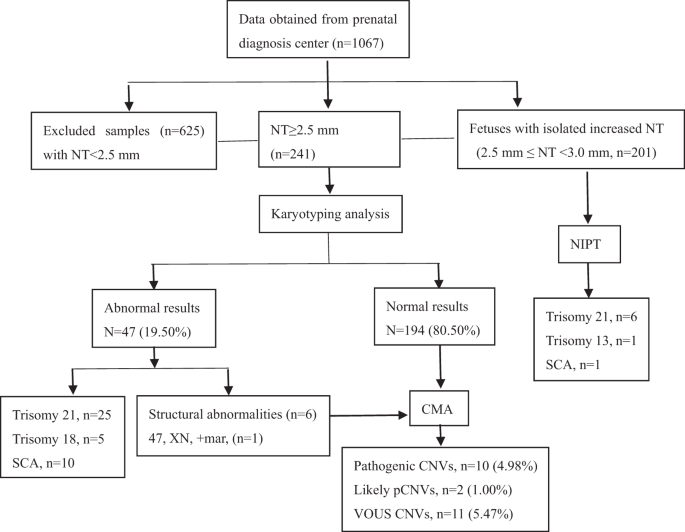
Chromosomal microarray analysis versus noninvasive prenatal testing in fetuses with increased nuchal translucency

alexandrossfakianakis shared this article with you from Inoreader

10038_2022_1041_Fig1_HTML.png

Journal of Human Genetics, Published online: 17 May 2022; doi:10.1038/s10038-022-01041-0

Chromosomal microarray analysis versus noninvasive prenatal testing in fetuses with increased nuchal translucency
View on Web

Radiographic bone volume alteration after jaw cyst enucleation with or without simultaneous bone grafts: A prospective randomized study

alexandrossfakianakis shared this article with you from Inoreader

Abstract

Objective

This study was aimed to evaluate bone healing after jaw cyst enucleation with or without bone substitutes by cone beam computed tomography, and to analyze potential influence factors for bone formation as well.

Materials and Methods

Sixty seven jaw cyst patients were randomly assigned to two groups. Thirty three patients in control group accepted cystectomy without any filling material. The rest 34 bone cavities which filled with xenograft (DBBM, Bio-Oss®) and covered by absorbable membrane (Bio-Gide®) were included in the guided bone regeneration (GBR) group. All patients were examined with cone bean computerized tomography before operation, 3 and 6 months after surgery. Linear regression analysis was applied to evaluate the influence factors of bone healing.

Results

There was no significant difference in bone formation rate at 3 months after enucleation, with shrinkage rate (SR) of cystic lesion in control group and GBR group of 26.43 ± 14.98% and 20.78 ± 10.80%, respectively (p > 0.05). Larger shrinkage area in GBR group was detected on postoperative radiographs after 6 months with SR of 60.11 ± 19.23%, when compared to those in patients without filling (6 months SR: 48.63 ± 19.39%, p = 0.018, <0.05). Linear regression analysis showed that cyst size was negatively correlated with bone formation.

Conclusion

GBR with bovine xenograft and absorbable membrane showed considerable bone regeneration property in the healing of jaw cystic defects after enucleation of radicular cysts. Cyst size showed a suppressive influence on bone formation.

View on Web

Κυριακή 15 Μαΐου 2022

Mucosal Melanoma of the Oral Cavity: What is the Role of Elective Neck Dissection?

alexandrossfakianakis shared this article with you from Inoreader
Mucosal Melanoma of the Oral Cavity: What is the Role of Elective Neck Dissection?

This study uses the National Cancer Database to analyze factors associated with survival in oral cavity mucosal melanoma, as well as the role of elective neck dissections. Lymph node involvement, distant metastasis, age, race, and male sex were associated with worse outcomes. While elective neck dissections did not improve overall survival, they may have a prognostic role and help select patients for treatment intensification.


Objectives

Mucosal melanoma (MM) is a rare malignancy that can present in the head and neck (H&N). The Oral cavity is the second most common primary site in the H&N after sinonasal mucosa. This study investigates the impact of demographic and clinical factors on survival in oral cavity MM. Further, it investigates the outcomes and utility of elective neck dissections (END) in the management of oral MM.

Methods

The National Cancer Database was used to evaluate 432 patients with oral cavity MM from 2004 to 2016. Kaplan-Meir and Cox regression analyses were used to determine variables associated with survival.

Results

The mean age was 64.0 ± 16.0 years. Most patients were white (85.1%) and male (60.0%). Gingiva (37.6%) and hard palate (36.1%) were the most common primary subsites in the oral cavity. Five-year overall survival was 31.0%. Age (Hazards Ratio [95% Confidence Interval], 1.03 [1.01–1.06]), N-stage (1.94 [1.10–3.42]), M-stage (10.13 [3.33–30.86]), male sex (1.79 [1.06–3.03]), and African-American race (2.63 [1.14–6.11]) were significantly associated with worse survival. 199 patients (46.9%) underwent neck dissection including 118 with lymph node yield (LNY) ≥ 18. The rate of occult nodal positivity was 45.4% for LNY ≥ 18 and 28.3% for LNY ≥ 1. ENDs were not associated with improved outcomes. However, occult lymph node involvement was associated with worse overall survival (p = 0.004).

Conclusions

Oral cavity MM has a poor prognosis. Lymph node involvement, distant metastasis, age, race, and male sex are associated with worse outcomes. Performing an END did not improve survival. However, END may have a prognostic role and help select patients for treatment intensification.

Level of Evidence

4 Laryngoscope, 2022

View on Web

Αναζήτηση αυτού του ιστολογίου

! # Ola via Alexandros G.Sfakianakis on Inoreader